
Head of the Department of Agricultural Economics and Agribusiness
University of Venda in Limpopo province
South Africa and an NRF-Y2-rated researcher
Topic Overview:
The peer review process is a critical component of academic publishing that ensures the quality, credibility, and integrity of research. This session will explore the key stages of peer review, from manuscript submission to final publication. Topics will include understanding reviewer roles, common challenges faced by authors, how to respond to reviewer comments, and tips for successful submissions. Attendees will gain insights into how to effectively navigate the peer review process, improve their chances of publication, and enhance their research impact.
Key Takeaways:
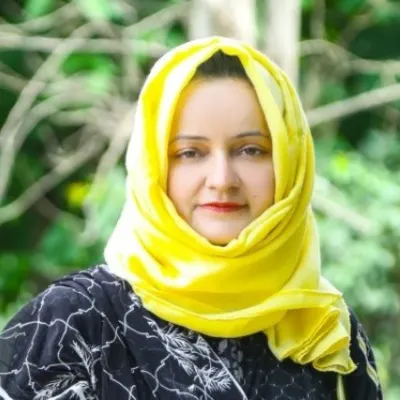
Department of Zoology
University of Mianwali
Punjab, Pakistan
Dr. Imrana Amir is an Assistant Professor in the Department of Zoology at the University of Minawali, Pakistan. She holds a PhD in Zoology with specialization in Fisheries & Aquaculture and has research expertise in fish culture, fish nutrition, water quality management, and environmental contamination including microplastics and aquatic toxicology. Her academic work focuses on sustainable aquaculture, alternative feed ingredients, fish physiology under stress, and contaminant impacts on aquatic organisms, and she has published in peer reviewed journals in these areas. She also supervises graduate students and contributes to national and international research networks in fisheries and environmental science.
Google Scholar: https://scholar.google.com/citations?hl=en&user=vz8ErnsAAAAJ
ORCID profile: https://orcid.org/my-orcid?orcid=0000-0001-7304-2816
Topic Overview:
Publishing in high-impact journals requires more than strong research findings it demands strategic planning, clear writing, and a deep understanding of journal expectations. This session will guide researchers through the full publication journey, from designing publishable research and selecting the right journal to preparing a compelling manuscript and responding effectively to peer review. Participants will gain practical insights into positioning their work for visibility, avoiding common pitfalls, and increasing the likelihood of acceptance in competitive, high-impact outlets.
Key Takeaways:

Head of the Department of Mathematics and Statistics and holds the Joint Met Office Chair in Climate Change in the Faculty of Environment
Science and Economy
University of Exeter
UK.
Prof. Mat Collins is currently Head of the Department of Mathematics and Statistics and holds the Joint Met Office Chair in Climate Change in the Faculty of Environment, Science and Economy, University of Exeter, UK. His research interests are in physical aspects of climate change, with a focus on future projections. Recent papers include those on monsoons, extreme temperatures and rainfall, El Nino and climate change, and tropical Pacific SST patterns. He has served twice as Coordinating Lead Author for the Intergovernmental Panel on Climate Change, on the Firth Assessment Report of Working Group 1 and on the Special Report on Oceans and Cryosphere in a Changing Climate. He has led several UK-funded large projects on physical climate projections including, ‘Emergence of Climate Hazards’ and ‘Robust Spatial Projections of Real-World Climate Change’. He is the Field Chief Editor of Frontiers in Climate. He has published nearly 200 peer-reviewed journal articles with a H-index of 64. In 2018 he was identified as a Highly Cited Researcher, ranked among the top 1% of researchers in Geosciences and he is on the Stanford list of the top 2% of scientists. He is a member of the CLIVAR Science Steering Group and was a past co-chair of the CLIVAR Climate Dynamics panel, and a member of the CLIVAR Pacific Regional Panel.
Topic Overview:
This interactive “Publication Tech Talk” session will provide researchers with direct guidance from the Editor-in-Chief on navigating the academic publishing landscape. The session will cover practical aspects of manuscript preparation, journal selection, editorial expectations, and peer review processes. Designed especially for emerging researchers, the talk will include a dedicated Q&A segment, allowing participants to raise specific concerns, clarify doubts, and gain insider insights into what makes a submission successful. The session aims to demystify the publication process and equip researchers with practical strategies to enhance their publication success.
Key Takeaways:

Executive Editor
Polish Journal of Environmental Studies
If you would like support in developing your conference paper into a journal publication, please feel free to contact us. Our team can guide you through the process, including identifying suitable journals and providing professional assistance tailored to specific journal requirements. We would be pleased to support you in progressing your research to publication.

Aim and Scope: Energy Nexus is an interdisciplinary journal focused on the convergence of energy, water, and agriculture. It covers topics such as grid systems, power-plant cooling, hydrology, aquaculture, biomass fuels, hydropower, renewable energy, and energy systems modeling. The journal addresses the growing competition and collaboration for finite natural resources used in energy production, water, and agriculture, with a strong focus on policy discussions.
Abstracting and Indexing: Scopus
Aim and Scope: Science of the Total Environment is an international, multi-disciplinary journal publishing novel, hypothesis-driven, and high-impact research on the environment, exploring its interfaces with the atmosphere, lithosphere, hydrosphere, biosphere, and anthroposphere. The journal prioritizes interdisciplinary studies that advance fundamental understanding of environmental interconnections. Field studies are given preference, and laboratory experiments must demonstrate significant methodological or mechanistic advances with clear environmental relevance. Descriptive, incremental, or regional studies with limited novelty will not be considered.
Abstracting and Indexing: Scopus
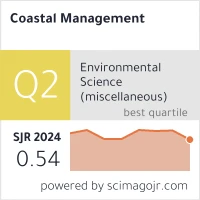
Aim and Scope: Coastal Management is an international, peer-reviewed journal focused on the technical, ecological, legal, political, social, and policy aspects of coastal and ocean resource management. It publishes applied research that explores management tools, techniques, and recent findings that directly impact policy and management. Articles must include a relevant management component and be grounded in peer-reviewed literature. Preference is given to international studies, although case studies are accepted if they use evaluative methods and are linked to peer-reviewed research. The journal serves public officials, researchers, and private organizations working on coastal management at local, national, and international levels.
Abstracting and Indexing: Science Citation Index Expanded; Social Science Citation Index;Selected Water Research Abstracts; and The Wilson Quarterly
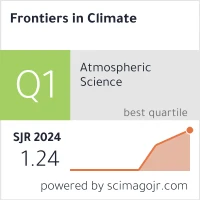
Aim and Scope: Frontiers in Climate is a multidisciplinary journal focused on climate research, covering topics like mitigation, adaptation, resilience, carbon dioxide removal, climate policy, health, economics, and risk management. It supports strategies for addressing climate change and advancing the UN’s SDG 13 on climate action. The journal emphasizes open access and requires validation for computational studies.
Abstracting and Indexing: Scopus, DOAJ, Crossref, CLOCKSS, OpenAIRE, Web of Science Emerging Sources Citation Index
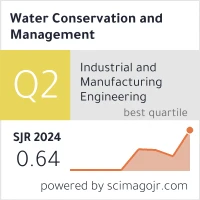
Aim and Scope: Water Conservation and Management focuses on promoting sustainable water resource use and management. It covers topics like water resource engineering, hydrology, irrigation, wastewater treatment, rainwater harvesting, and groundwater recharge. The journal also addresses the socio-economic aspects of water use and welcomes interdisciplinary studies combining technology, policy, and community approaches to global water challenges. It aims to contribute to sustainable water security and environmental stewardship.
Abstracting and Indexing: AGRIS, SCOPUS, DOAJ, I FOCUS, CNKI, Index Copernicus, SCILET, JGate, WANFANG DATA, INFLUENCES, CONTRIMETRIC, EBSCO
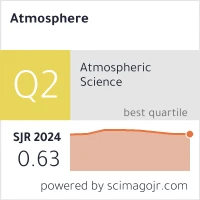
Aim and Scope: Atmosphere is an open-access, interdisciplinary journal focused on all aspects of atmospheric science. It publishes original research, reviews, communications, and special issues on topics including aerosols, air quality, pollution control, biometeorology, climatology, meteorology, and planetary atmospheres. The journal welcomes experimental, observational, and modeling research, with a rigorous peer-review process and encourages the submission of supplemental materials when public-access repositories are unavailable.
Abstracting and Indexing: DOAJ, EBSCO, Elsevier Databases, Scopus, Engineering Village, Ei Compendex, GEOBASE, Reaxys, Gale, GeoRef, Inspec, J-Gate, OpenAIRE.
Aim and Scope: JJEES provides a platform for scientific and technical papers addressing the evolving needs of Earth and Environmental Sciences. The journal publishes original research, short communications, and reviews across fields such as geology, land, water, air, and plant sciences. It seeks manuscripts that meet high standards of significance and academic excellence, with English as the primary language of communication.
Abstracting and Indexing: Scopus
Aim and Scope: The Polish Journal of Environmental Studies publishes original research and critical reviews on environmental pollution, including atmospheric, water, soil, and biological contamination. Topics include pollution control, harmful substances, analytical methods, environmental impact on living organisms, waste management, land reclamation, and human health hazards. The journal fosters interdisciplinary exchange among scientists and researchers focused on environmental protection and sustainability.
Abstracting and Indexing: Web of Science Core Collection, Scopus, NCBI (PubMed), Chemical Abstracts, Ulrich’s International Periodicals Directory, R.R., Bowker, USA, CAB International, Oxon, U.K.

Do you still need our guidance and support on publishing your research? We’re here to help! Our Publication Support service is designed to answer all your questions and assist you in navigating the publication process effectively.
Ms. Jayasvie Thilakarathne
jayasvi.t@tiikmedu.com
+94 711 884 562
Follow the Climate Change Community (RCCC) channel on WhatsApp